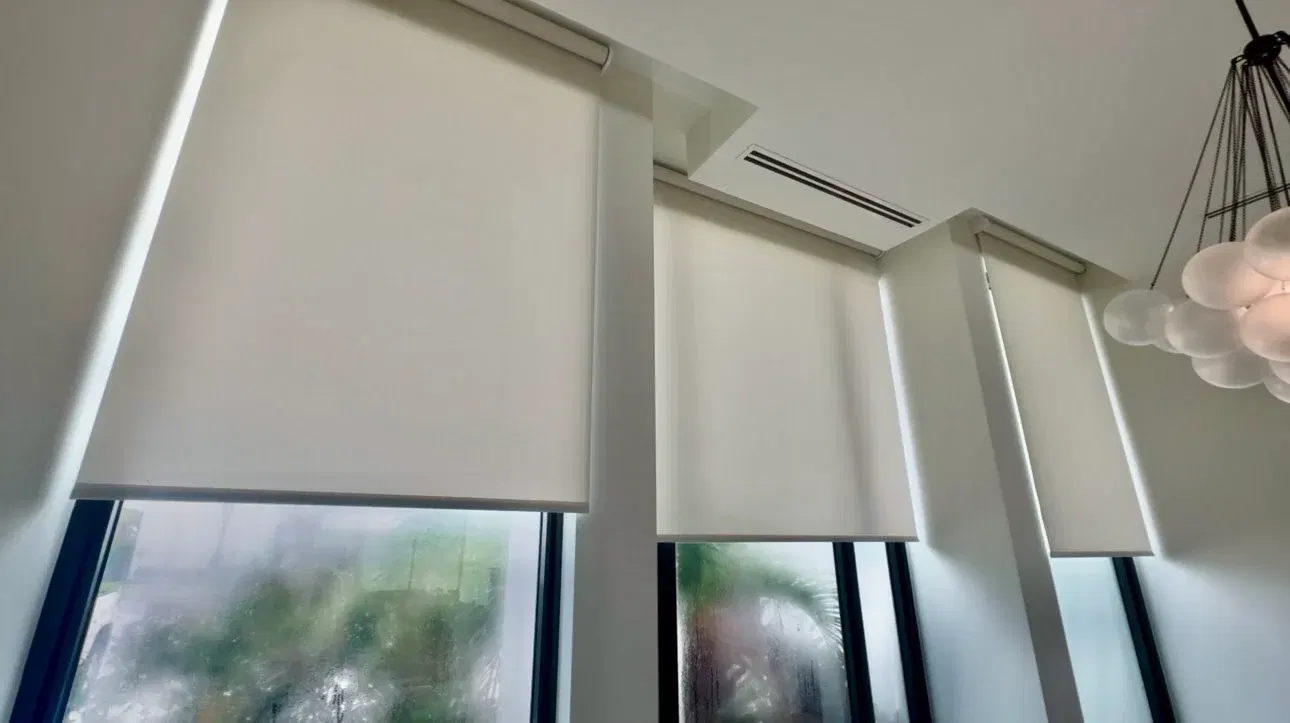
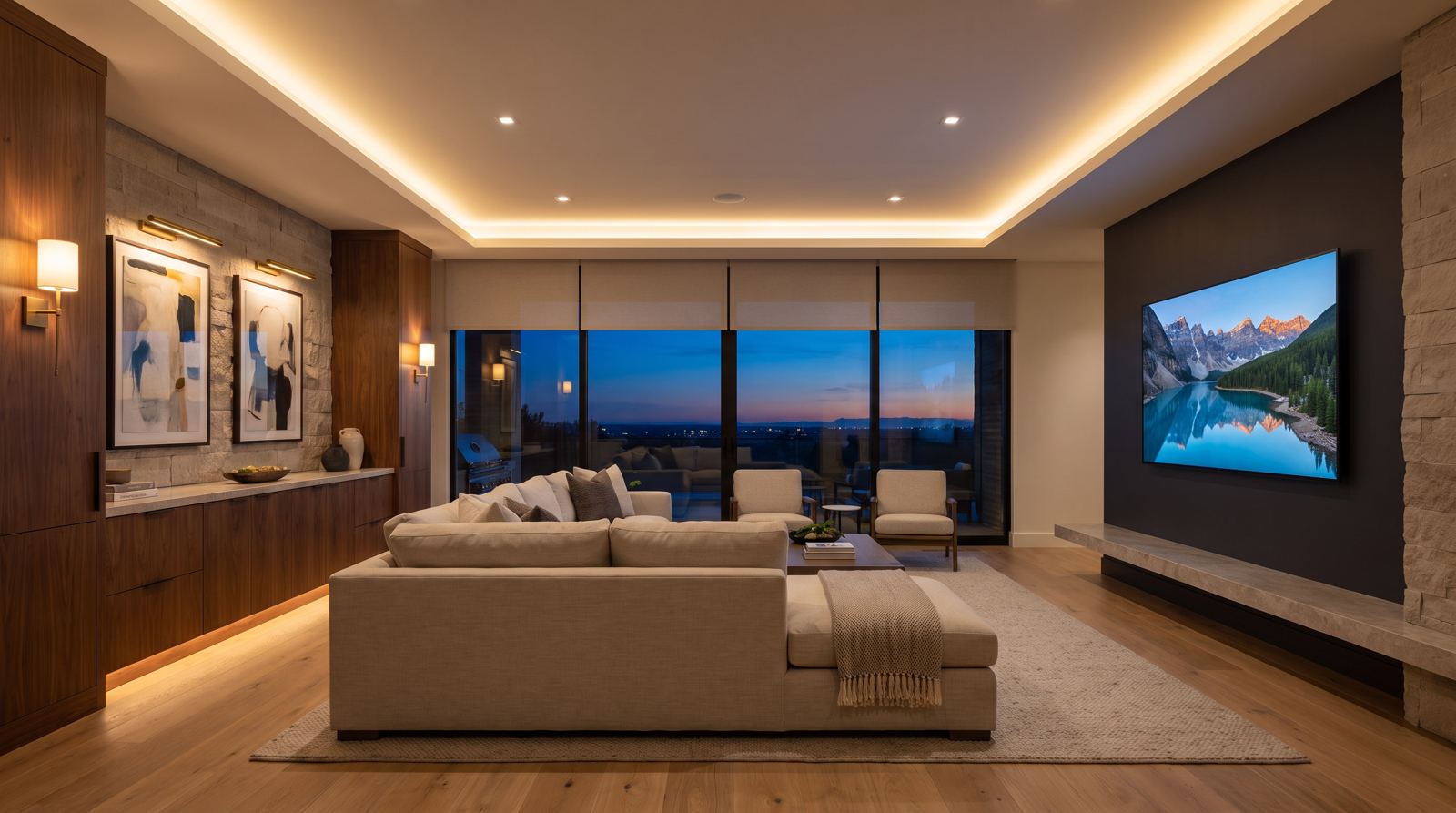
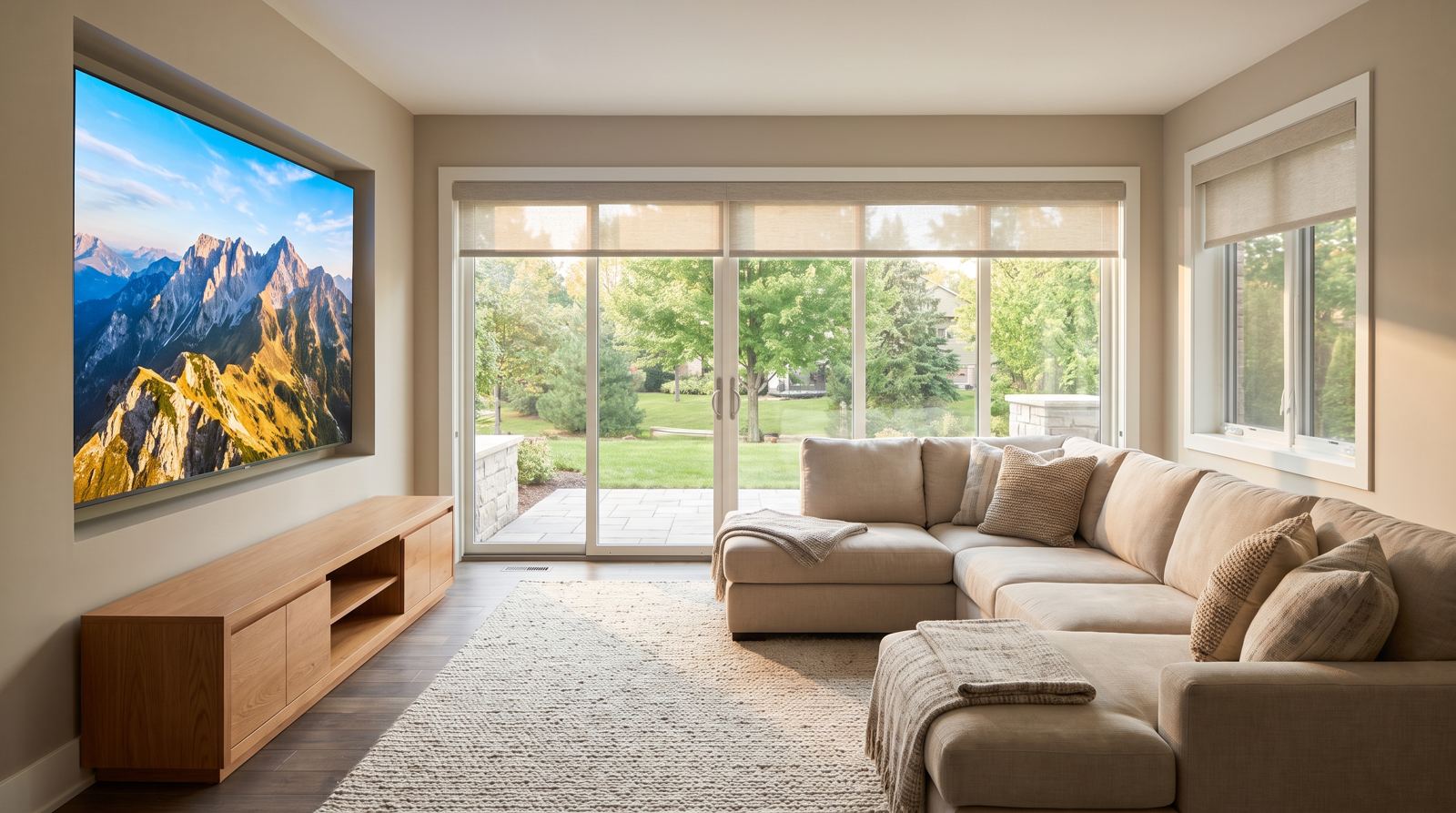
The worst motorized shade is the one somebody remembers after the drywall is up. We see it every year: a beautiful home goes up in Chesterfield or Wentzville, the windows are huge and west-facing, and the conversation about window treatments in St. Louis starts at the punch list. By then the options are batteries, surface-mounted fascia, and a client who can see every compromise from the sofa. So here's our position, plainly: automated shades and drapes are a rough-in decision, not a decorating decision. Treat them like lighting or HVAC and the result looks built in. Treat them like furniture and it looks added on.
Our team's view is simple. Automated shades are hassle free, easy to use, they look great, and they're efficient. If you're building or renovating, you should be considering shades, drapes, or both. We work with Norman USA and Shade Innovations, and what follows is the checklist we wish every project team ran before framing inspection.
Why the Timing Matters More Than the Product
A good motor in a bad pocket still looks bad. Almost everything a homeowner notices (the clean line at the head of the window, no visible cords, no light leaking at the edges, shades that move together in silence) is decided by blocking, power and pocket depth. None of that is cheap to fix later.
St. Louis makes the case stronger. Our summers are long and humid, and late afternoon sun through a wall of west glass will cook a great room and fade a rug in a couple of seasons. Shades that drop on a schedule, or when the sun hits a certain angle, do the work nobody remembers to do by hand. That's where the efficiency comes from: not a feature list, but the shade actually being down when it matters.
The Checklist: What to Ask
1. How is each shade getting power?
This is the first question, and the answer shapes everything. Broadly you have three choices:
- Low-voltage wired motors, run back to a central power supply. Our default for new construction. Reliable, quiet, nothing to recharge.
- Line-voltage motors, fed from a nearby circuit. Useful for very large or heavy shades and drapery, but they need an electrician and code-compliant boxes at the head.
- Battery or rechargeable motors. A real option for retrofits and historic homes, like a brick rowhouse in Lafayette Square where opening plaster isn't on the table. In new construction, they're usually a sign someone missed the window.
If the answer is "we'll figure it out later," later means batteries.
2. Is there a pocket, and is it deep enough?
Recessed pockets in the ceiling or header are the single biggest upgrade in how a finished room looks. The shade disappears when it's up. But pocket depth has to match the roll diameter of the actual fabric and length, and blackout fabric rolls thicker than a sheer. Get the shade selection close before the framer builds the pocket, not after.
3. What happens at the sides?
Light gaps at the edges are what clients complain about in theaters and bedrooms. If a room needs real darkness, ask about side channels and a sill or bottom channel. If it doesn't, decide on purpose and set the client's expectations.
The Checklist: What to Look For
Fabric openness, chosen room by room
Solar fabrics are rated by openness, usually somewhere between about 1% and 10%. Lower openness blocks more glare and heat but darkens the view. Higher openness keeps the view but lets more light through. A home office facing a golf course and a primary bedroom facing a streetlight need completely different answers. One fabric through the whole house is a shortcut, and it shows.
For bedrooms, media rooms and anywhere people sleep late, plan a dual system: a solar shade for daytime and a blackout layer or drapery behind it.
Motor noise and motion
Ask to hear the motor. Seriously. A shade that whines in a quiet bedroom at 6 a.m. will be the only thing the client remembers about it. Also ask about soft start and stop, and whether a bank of shades can move in sync so the hem bars line up. Uneven shades across one wall look broken even when they aren't.
Drapery tracks that are planned, not bolted on
Motorized drapery is the move for tall living rooms, formal dining rooms and anywhere fabric adds warmth. The track can be recessed into the ceiling for a clean line. That again means blocking, power at one end, and a decision about stack-back space so open drapes don't cover the glass.
Integration that goes beyond an app
A shade app is fine. A shade system that's tied into the rest of the house is better. Ask how shades will talk to the control system, lighting scenes and keypads. "Good night" should close the bedroom shades and dim the lights in one press. A media scene should drop the theater shades before the projector comes up. That's the job of whole-home automation, and it's where shades stop being a gadget and start being part of how the house works. Pair it with lighting control and you get scenes that actually feel finished.
The Checklist: What to Avoid
Avoiding hardwired keypads. Phones get lost, dead or borrowed. Guests and grandparents need a button on the wall, engraved, in a sensible spot.
Specifying shades without a network plan. Many systems rely on wireless links between motors, hubs and the control system. Large homes with stone, brick and steel need a real plan for coverage.
Putting the same treatment on every window. Light, privacy and heat change by orientation and room use. A single spec for 40 windows is easier on paper and worse to live with.
Letting three trades own one window. The electrician, the drapery workroom and the AV team each touch it. Someone needs to own the whole thing, from blocking to programming. On our projects, that's us.
For Commercial Projects Too
Everything above applies to restaurants, hotel lobbies, offices and showrooms, with higher stakes. Glare on a conference room display, a dining room that gets sun in diners' eyes at 5 p.m., a retail window that fades product: automated shades on a schedule solve these without depending on staff to remember. The planning rules are the same. Power, pockets, fabric and control, decided early.
Where to Start
If you're drawing a home or a renovation right now, the most useful thing you can do is put shades on the agenda before framing and get a window schedule in front of your AV partner. We'll go through orientation, room use, fabric and power with you, and coordinate the details with the trades. You can read more about our approach to motorized shades.
When you're ready to talk through a project, whether it's one great room or a whole building, start with our two-minute project questionnaire. Tell us what you're working on and we'll pick it up from there.